
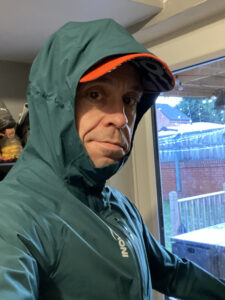
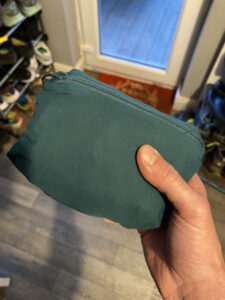
It was time for my usual Friday run, so I had a quick look out of the window to see the usual winter scene out on the street, yep, it was raining. A quick glance at the temperature told me it was 8 dregrees out. The day’s run was going to be wet and cold, an ideal time to try out my new waterproof jacket! I’d been looking forward to the opportunity to try out this jacket for a while and this day was to be the day. I got my running gear on and headed out the door into the rain. But unfortunately, not. About 5 minutes into the run the rain eased off, the wind died down and I was starting to get warm. It might’ve been the hill I just run up, but I didn’t want to persevere and be uncomfortable for the rest of the run so I took the decision to take the jacket off. The jacket has a handy feature which that lets you fold it into itself and make a little pouch. Handily, it fit into my belt so I tucked it away and carried on. It was a tad bulky in my belt, but pushing it round to the side I soon got used to running with it.
About 4 miles into the loop I’d planned, it turns to head in a southward direction and along the side of the river. It doesn’t offer much in the way of shelter so as soon as I turned I got slapped in the face by the headwind and, because misery loves company, it started to rain. Not just a few light specs of rain either, but full on downpour. Chuntering to myself, I took the opportunity as I ran under a railway bridge to get my jacket out again. It didn’t take long to unravel it and put it back on and I was away again without taking so much time that I started to cool down. As usual in wet weather, I had my cap on to keep the rain out of my eyes and the hood on this jacket fit over the top of it nicely whilst still keeping the weather out. I battled on against the wild wind and rain along the side of the river feeling quite comfortable. I didn’t have my gloves on and normally my hands can get quite cold when exposed to the rain but this jacket had handy thumb hooks in the sleeves which added and extra layer of protection against the elements for my hands.
I got home and finished the run after 8 miles feeling comfortable and dry – quite thankful for the jacket and pleased that it turned out to be a pretty good field test!
Jackets
The jacket has got to be one of the most important parts of winter kit. It’s shelter from the rain, insulation from the cold, a wind block and all of this is rolled up with some additional pocket storage. The main thing I have found with jackets is that you pay for what you get. I usually agonise over the cost of my running gear and try to get the cheapest bit of kit I can and they usually end up being binned after a couple of trys before I end up buying the expensive jacket anyway! I’m pretty sure that now I have actually now spent more on jackets than if I had just payed out the money in the first place. So, my first bit of advice here would look at a respectable brand, and aim in the cost in the ballpark of £100 – £150.
So, this why my jacket works for me. Firstly, the ability to take it off or put it on during a run, I needed it to compress down into something small enough to store away. Being that I wasn’t on a long run, I hadn’t taken my pack out but I had my belt on to carry my mobile in (standard). The jacket stored away into the belt sufficiently that it wasn’t a burden and I could run plenty well without it. The jacket’s material is really breathable, lightweight and is fantastic at repelling water. Couple this with the taped seems, I stay completely dry in it. I have had some jackets that made me sweat so much that sweat tipped out of the arms when i put them by my sides. But with this, I didn’t notice much difference in wearing it (particularly in the heavier weather).
The thumb hooks are a pretty cool feature too, my previous jacket had a velcro strap to tighten round the wrists but i found that my gloves/hands got wet and extremely cold which really affected my dexterity when trying to open zips or gels. The thumb hooks provide an extra level of cover for the hands which will prevent my gloves getting saturated and cold as quickly.
Selecting a Jacket
Selecting your coat can have a number of factors that can go into the decision making process. Will you be wearing it for a race? The first question you should ask yourself is how you’re expecting to use it. Are you going to have multiple jackets for different weather or will you have one jacket for all occasions (this is me, I’m tight!).
When it comes to British running, its worthwhile to think of the jacket with these requirements:
- Shed and store ability
- Keeps the weather out
- Keeps you warm but breathable
Shed & Store
If you’re like me and run hot, adding extra layers makes me overheat so I like to be able to remove or add when needed. With the typical English weather we can have freezing cold winds up on the hills but then descend down into the shelter of some trees and the temperature goes up, making you overheat (a bit like what happened on my run). Having the ability to shed and store the jacket comes in very useful for being able to put it away and carry on without having to be impeded by wrapping around your waist or similar.
Keep the Weather Out
This might seem like an obvious statement but it’s easy to get caught out. Not knowing the difference between showerproof and waterproof, for example, can catch you out. Showerproof is water resistant not waterpoof which means they are more suited for light showers and shorter runs. One of the most obvious differences is that showerproof jackets don’t have taped seems which means that, eventually, the water will get through and when it does it will take a long time for you to get warm again.
Warm but Breathable
This ties in with the waterproofing, in general, showerproof jackets are more breathable but it can come at a cost, more breathability results in less insulation. There are some jackets that are designed to keep the wind out, these “windbreaker” jackets are typically thicker and heavier owing to blocking the wind from getting through. For recreational running you’re best suited to something lightweight. But when you start going into longer activities into the countryside or mountains at lower intensities, then you’ll need to make sure you get something more suited to the activity duration and environment.
In the modern world, we have some great materials that offer a great balance between both breathability and insulation, but it usually comes at a cost. Which takes us back to my original statement “you pay for what you get”.
